Netanyahu’s Six-Nation Alliance: Strategy, Risks & Impact

What Does Netanyahu’s “Hexagon Alliance” Actually Represent?
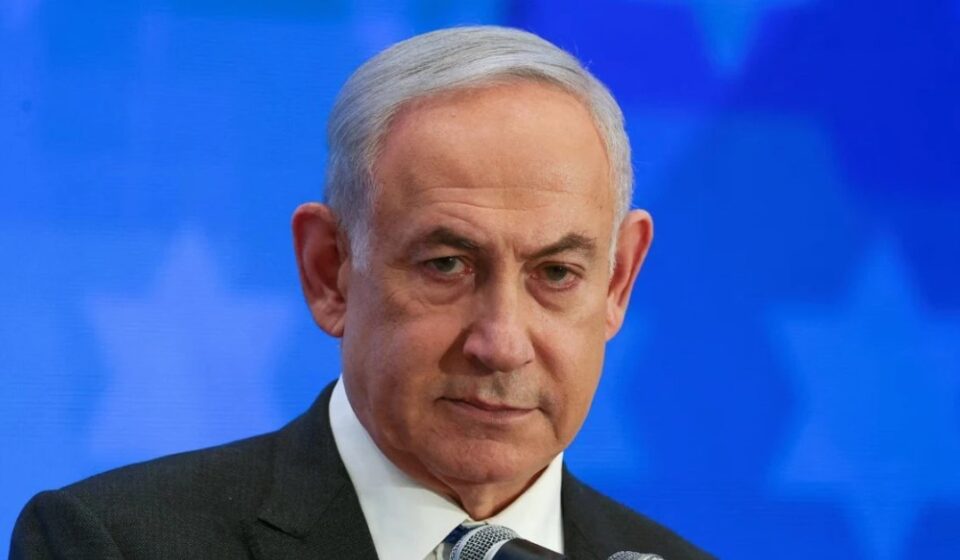
Israeli Prime Minister Benjamin Netanyahu has recently outlined a vision for a new regional alignment that he described as a “hexagon of alliances.” According to his remarks, this structure would include Israel, India, Greece, and Cyprus, along with unnamed Arab, African, and Asian states. He framed the initiative as a response to what he called “radical axes” in the Middle East, referring to both a “radical Shiite axis” and a developing “radical Sunni axis.”
At first glance, the proposal appears ambitious and strategic. However, no government has publicly endorsed the initiative in the form Netanyahu presented it. This raises important questions: What exactly is this “hexagon”? Is it a military bloc, a diplomatic platform, or an economic partnership network? And does it have real prospects of functioning in practice?
Which Countries Are Expected to Be Part of This Strategic Alliance?
Netanyahu explicitly mentioned four countries:
-
Israel
-
India
-
Greece
-
Cyprus
He also referred to additional unnamed Arab, African, and Asian states.
The Core Group: Israel, Greece, and Cyprus
Israel, Greece, and Cyprus already cooperate through a trilateral framework established in 2016. Initially focused on energy cooperation in the Eastern Mediterranean, this grouping has gradually expanded into defense and security coordination. Joint military exercises, arms agreements, and discussions about air defense systems illustrate that this partnership is not theoretical — it already exists in operational terms.
However, this cooperation has primarily been tactical and interest-driven, particularly in the Eastern Mediterranean, rather than part of a broader Middle Eastern ideological bloc.
India’s Potential Role
India’s inclusion significantly elevates the geopolitical weight of the proposal. Under Prime Minister Narendra Modi, India and Israel have deepened cooperation in defense, artificial intelligence, cybersecurity, agriculture, and trade.
However, India traditionally pursues a pragmatic and multi-aligned foreign policy. As a founding member of the Non-Aligned Movement, New Delhi has historically avoided rigid bloc politics. It maintains relationships simultaneously with the United States, Russia, Iran, Gulf Arab states, and China.
For India, the relationship with Israel is important — but largely centered on technology, security, and trade — not necessarily on joining a regional ideological coalition.
The Unnamed Arab and Regional States
The most uncertain component of the “hexagon” is the unspecified Arab, African, and Asian participation. While some Arab states have normalized relations with Israel in recent years, publicly joining a security bloc framed as “axis versus axis” could carry domestic and regional political costs — especially in light of ongoing tensions related to Gaza.
Without clear names and commitments, this outer layer remains conceptual rather than concrete.
Is This a Military, Diplomatic, or Economic Coalition?
The “hexagon” appears to combine elements of all three, but with important distinctions.
Diplomatic Dimension
At the diplomatic level, the proposal signals that Israel seeks to demonstrate it is not internationally isolated. The framing of a structured alliance can project strength and leadership, especially at a time of domestic and international political pressure.
Diplomatic coordination — joint statements, strategic dialogues, and summit meetings — is the easiest form of cooperation to implement. It does not require binding defense obligations.
Economic and Technological Dimension
There is strong potential for economic cooperation within this framework. Areas include:
-
Eastern Mediterranean energy projects
-
Infrastructure and maritime corridors
-
Artificial intelligence and quantum computing
-
Defense technology and cybersecurity
-
Trade and investment flows
These partnerships are often interest-driven and can continue even amid political tension.
Security and Military Dimension
The most sensitive dimension involves defense cooperation. Israel has expanded arms sales and joint exercises with Greece and Cyprus, and it maintains deep defense ties with India.
However, a formal military pact resembling NATO — with collective defense commitments — would require far greater political alignment and shared threat perception. Currently, there is no public indication that such a binding structure is being negotiated.
In practice, the “hexagon” seems more likely to function as a flexible security coordination network rather than a formal defense treaty.
How Do Iran and the War in Gaza Affect This Initiative?
Iran as Strategic Justification
Netanyahu’s reference to a “radical Shiite axis” centers primarily on Iran and its network of regional allies, often described as the “Axis of Resistance.” This network includes Hezbollah in Lebanon, certain Iraqi armed factions, and the Houthis in Yemen.
https://www.aljazeera.com/news/2026/2/23/whats-netanyahus-planned-hexagon-alliance-and-can-it-work
By presenting Iran as a central destabilizing force, Netanyahu frames the “hexagon” as a necessary balancing coalition. For countries that view Iran as a regional competitor, this narrative may resonate.
However, not all potential partners wish to be openly aligned in a confrontational bloc against Iran. Many maintain economic, diplomatic, or security ties with Tehran.
The Gaza War as a Political Constraint
The ongoing conflict in Gaza complicates the situation significantly. Public opinion in many regional countries has hardened, making overt alignment with Israel politically sensitive.
Even governments that maintain quiet cooperation with Israel may hesitate to join a highly visible alliance during active conflict. This dynamic acts as a restraining factor on any formal expansion of the “hexagon.”
In short, Iran strengthens the security argument for such a bloc, while Gaza weakens the political feasibility of openly formalizing it.
Does the “Radical Sunni Axis” Narrative Reflect Reality?
Netanyahu also referred to a developing “radical Sunni axis.” However, regional dynamics suggest that Sunni-majority states are not forming a unified ideological front. Instead, some have coordinated diplomatically in response to Israeli actions, particularly regarding Gaza and Syria.
Rather than a structured Sunni bloc, the current pattern appears to involve pragmatic coordination, issue-based diplomacy, and cautious engagement.
This raises the possibility that the “axis versus axis” framing is more rhetorical than descriptive.
What Are the Real Chances of This Alliance Functioning in Practice?
The answer depends on how “functioning” is defined.
If It Means a NATO-Style Pact
The likelihood is low. A formal military alliance would require:
-
Clear membership commitments
-
Shared defense obligations
-
Political consensus among diverse governments
-
Public support within participating states
Currently, none of these conditions appear fully in place.
If It Means a Flexible Network of Partnerships
The likelihood is significantly higher. Israel already maintains active defense, technological, and economic ties with several of the mentioned countries. Expanding these into a more coordinated framework is feasible.
Such a network could include:
-
Defense procurement and training
-
Intelligence sharing
-
Technology collaboration
-
Infrastructure and energy projects
-
Diplomatic coordination during crises
This model does not require treaty-level commitments and allows each country to preserve strategic flexibility.
Why Is Netanyahu Promoting This Initiative Now?
The proposal comes at a politically sensitive moment. Netanyahu faces:
-
Domestic protests over judicial reforms
-
Ongoing corruption trials
-
Economic pressures linked to prolonged conflict
-
International scrutiny
Projecting an image of diplomatic outreach and strategic leadership may serve both domestic and international political purposes. It reinforces the narrative that Israel remains an influential regional actor capable of shaping alliances.
Netanyahu’s “hexagon alliance” represents more a strategic vision than a finalized structure. It aims to link Israel with Greece, Cyprus, India, and potentially additional regional partners in a framework combining security, diplomacy, and economic cooperation.
It is unlikely to emerge as a formal NATO-style bloc. However, it could evolve into a flexible network of coordinated partnerships, particularly in defense technology, energy, and infrastructure.
Iran provides the strategic rationale. Gaza complicates the political optics. India and other potential partners are likely to approach the concept pragmatically rather than ideologically.
In practical terms, the “hexagon” may function best as a loose strategic alignment — not a rigid alliance — shaped by evolving regional realities rather than fixed ideological divisions.