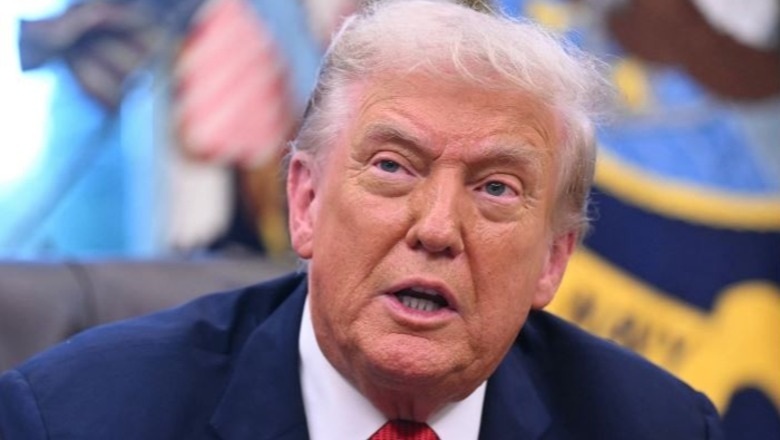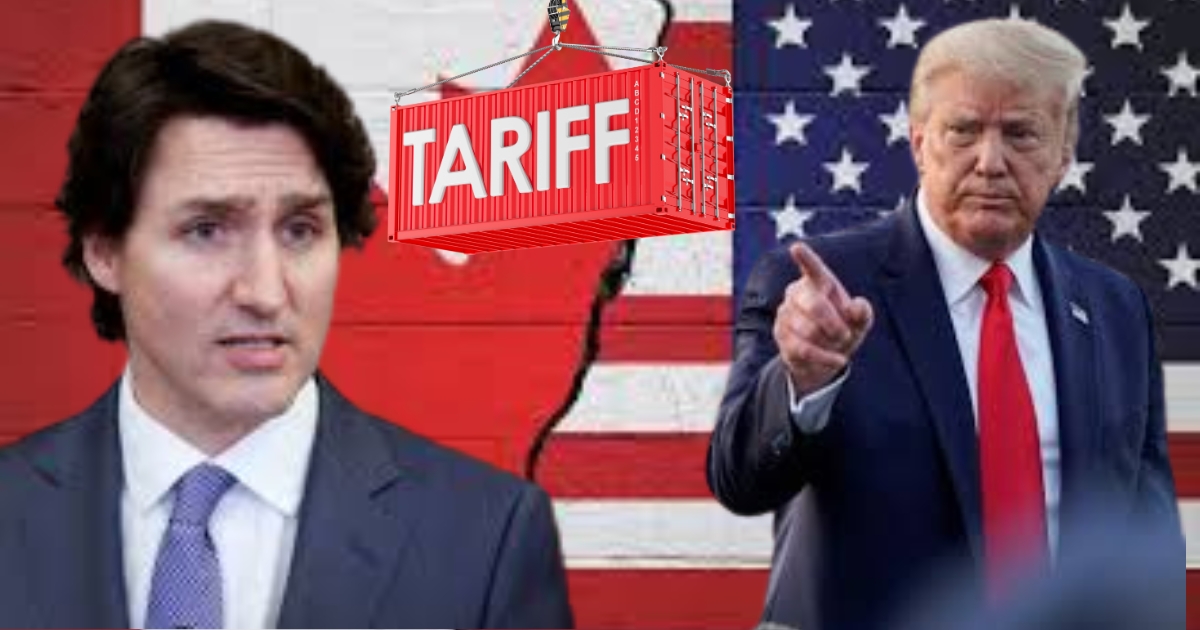
When Donald Trump speaks about trade, the world listens — and markets react. This time, his words were aimed directly at one of America’s closest allies: Canada. In a sharply worded statement, Trump warned that if Canada proceeds with any major trade agreement with China, the United States could respond with tariffs as high as 100% on Canadian goods.
The remark immediately reignited fears of a renewed global trade war, reminiscent of the turbulent years when tariffs became a central tool of U.S. foreign and economic policy. While Trump is no longer in office, his influence over Republican voters and economic narratives remains strong, making his warning far more than simple rhetoric.
A Warning That Shook Ottawa
Canada has long walked a careful line between maintaining its strategic partnership with the United States and expanding economic ties with China. Beijing is Canada’s second-largest trading partner, while Washington remains by far its most important one. Trump’s warning forces Ottawa into a difficult position: deepen trade with the world’s second-largest economy or risk severe retaliation from its closest ally.
According to Trump, allowing China deeper access to North American markets would “undermine U.S. workers, security, and economic sovereignty.” He argued that Canada, by signing any broad trade pact with Beijing, would effectively become a backdoor for Chinese goods into the United States.
This argument echoes concerns frequently raised by U.S. policymakers across party lines. China’s manufacturing power, state subsidies, and industrial strategy have long been criticized for distorting global markets.
Why China Is at the Center of the Storm
China’s role in global trade has expanded rapidly over the past two decades. For countries like Canada, the Chinese market represents enormous opportunities in agriculture, energy, technology, and raw materials. However, it also comes with political and security concerns.
In recent years, Western governments have grown more cautious about economic dependence on China. Issues ranging from intellectual property theft to national security risks have pushed many countries to reassess their trade relationships.
For Trump, China remains the central economic rival of the United States. During his presidency, he launched an aggressive tariff campaign aimed at reducing the U.S. trade deficit and pressuring Beijing to change its economic practices. That campaign reshaped global supply chains and altered diplomatic relationships worldwide.
For deeper context on U.S.–China trade tensions, see this overview from the Council on Foreign Relations:
👉 https://www.cfr.org/backgrounder/us-china-trade-war
What a 100% Tariff Would Really Mean
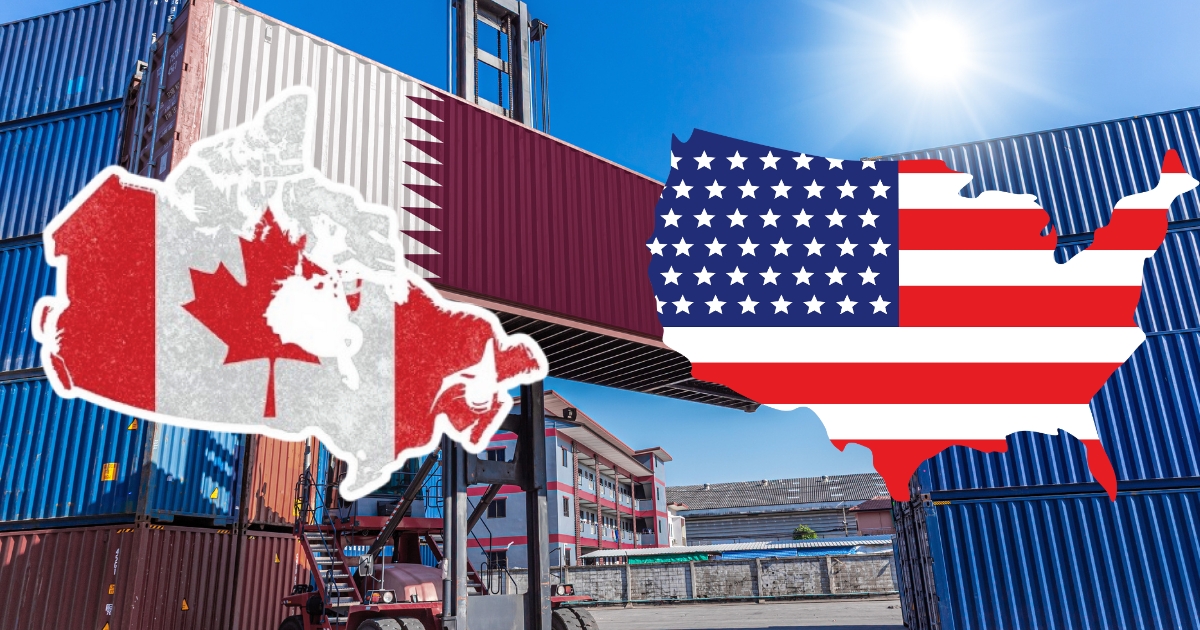
A 100% tariff is not a symbolic gesture — it is an economic weapon. Such a move would effectively double the cost of Canadian exports entering the U.S. market. Industries that rely heavily on cross-border trade would feel the impact immediately.
Canada exports billions of dollars’ worth of goods to the United States each year, including automobiles, lumber, aluminum, steel, agricultural products, and energy. Many supply chains are deeply integrated, meaning tariffs would hurt both sides of the border.
Economists warn that such extreme tariffs could lead to job losses, higher consumer prices, and long-term damage to North American economic cooperation. Small and medium-sized businesses, in particular, would struggle to absorb sudden cost increases.
Canada’s Delicate Balancing Act
Canadian leaders have so far avoided confirming any imminent comprehensive trade agreement with China. Instead, officials emphasize a “diversified trade strategy,” aimed at reducing overdependence on any single market.
Still, Trump’s remarks add pressure. Even the possibility of U.S. retaliation could discourage Canadian policymakers from pursuing deeper ties with Beijing.
Canada’s position highlights a broader global dilemma: how to benefit from China’s massive market without triggering backlash from the United States. Many U.S. allies in Europe and Asia face similar challenges.
For insight into how trade diversification affects middle powers, this analysis by Brookings Institution provides valuable context:
👉 https://www.brookings.edu/articles/global-trade-fragmentation-explained/
Political Calculations Behind the Statement
Trump’s warning should also be viewed through a political lens. With U.S. elections approaching, trade and China are once again becoming central campaign issues. Tough talk on China plays well with voters concerned about jobs, manufacturing, and national security.
By targeting Canada, Trump sends a broader message to other U.S. allies: aligning too closely with China could come at a cost. This strategy reinforces his long-standing “America First” approach, which prioritizes domestic economic interests over traditional alliances.
Even outside office, Trump’s ability to shape public debate forces current leaders to respond. Markets, investors, and foreign governments know that his statements often signal future policy directions should he return to power.
Reactions From Markets and Analysts
Financial markets reacted cautiously to Trump’s comments. While no immediate policy change followed, the rhetoric alone was enough to raise concerns among investors.
Analysts note that uncertainty is often more damaging than actual tariffs. Businesses delay investments, supply chains hesitate to expand, and long-term planning becomes difficult.
Trade experts warn that escalating tensions between major economies could accelerate the fragmentation of global trade. Instead of one interconnected system, the world may move toward competing economic blocs — one centered around the U.S. and another around China.
The World Trade Organization has previously cautioned against such fragmentation, noting that it could slow global growth and increase inequality. For more on WTO concerns, see:
👉 https://www.wto.org/english/news_e/news22_e/trdev_30nov22_e.htm
How This Could Affect Everyday Consumers
While trade disputes often sound abstract, their consequences reach everyday life quickly. Tariffs typically lead to higher prices on imported goods, from cars and electronics to food products.
If the U.S. were to impose massive tariffs on Canadian imports, American consumers could see price increases across multiple sectors. At the same time, Canadian producers would face reduced competitiveness, potentially leading to layoffs and reduced investment.
In an already inflation-sensitive environment, policymakers are particularly wary of actions that could drive prices higher.
A Signal to the World
Perhaps the most important aspect of Trump’s warning is the signal it sends globally. It reinforces the idea that economic decisions are no longer purely economic — they are deeply political.
Countries are increasingly forced to choose sides, balancing economic benefits against strategic alliances. For Canada, the decision is especially complex given its geographic proximity and economic integration with the United States.
Whether or not Canada ultimately pursues a trade deal with China, Trump’s statement underscores a new reality: in today’s global economy, neutrality is becoming harder to maintain.
What Happens Next?
For now, Trump’s threat remains hypothetical. No tariffs have been imposed, and no confirmed Canada–China trade agreement has been announced. However, the warning itself may be enough to slow negotiations or reshape diplomatic strategies.
Observers will be watching closely for responses from Canadian officials, reactions from Beijing, and signals from Washington’s current leadership. Each move will carry implications far beyond North America.
- https://sumlera.com/mazda-launches-a-new-electric-car-for-europe/
- https://sumlera.com/explosive-device-injures-politician-during-live-interview/
One thing is clear: trade wars may not dominate headlines as they once did, but the underlying tensions never truly disappeared. With voices like Trump’s back in the spotlight, the risk of renewed economic confrontation is once again very real.