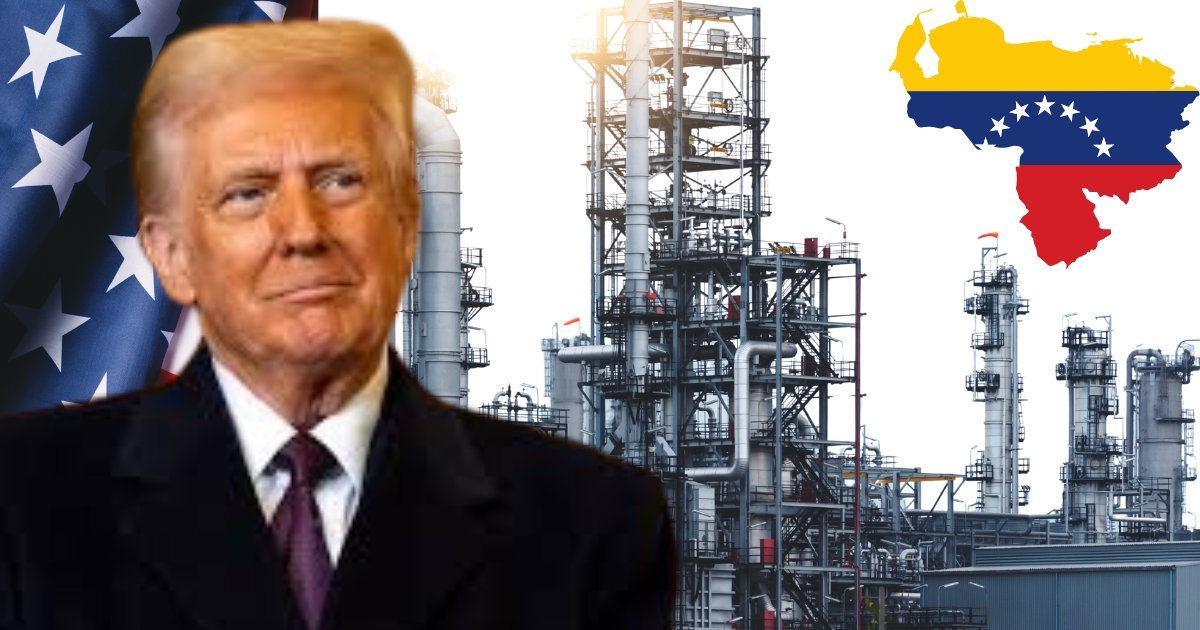
Trump Claims Venezuela Gave the US $4 Billion in Oil — What Happens Next
Trump’s Statement That Shook the Energy World
During a high-profile meeting with top executives from major American oil companies, Donald Trump made a striking claim: the United States had received Venezuelan oil worth approximately $4 billion, equivalent to 30 million barrels, in a single day. The statement immediately drew global attention, not only because of its sheer scale, but also because of its geopolitical implications.
🔗: https://www.bbc.com/news/articles/c4grxzxjjd8o
Trump framed the claim as part of a broader effort to put “America First” in global energy markets. According to his remarks, the oil transfer would primarily benefit the United States while also providing limited financial relief to Venezuela. The comments sparked intense debate among economists, diplomats, and energy analysts worldwide.
While no official documentation was presented during the meeting, Trump insisted that the arrangement marked the beginning of a long-term strategy involving Venezuelan crude, US refining capacity, and global oil supply chains.
The Context — Venezuela’s Oil Industry in Crisis
Venezuela sits atop the largest proven oil reserves in the world, yet its energy sector has been crippled for years by mismanagement, sanctions, and underinvestment. Once a global powerhouse capable of producing more than three million barrels per day, the country’s output has fallen dramatically.
Under the leadership of Nicolás Maduro, Venezuela’s state-run oil company PDVSA struggled with aging infrastructure, technical brain drain, and limited access to international capital. US sanctions further isolated the country from global markets, sharply restricting its ability to sell crude oil freely.
Trump’s claim suggests a dramatic shift away from this status quo, raising questions about whether sanctions were eased, bypassed, or restructured in ways not yet fully disclosed.
How Could a $4 Billion Oil Transfer Work?
Energy experts note that 30 million barrels of oil roughly aligns with Trump’s stated valuation, depending on global crude prices and oil quality. Such a volume, however, would normally require extensive logistics, contracts, shipping capacity, and refining agreements.
Trump asserted that the United States helped build Venezuela’s oil industry decades ago and is now “taking back what was taken.” This rhetoric suggests a political narrative rather than a traditional commercial transaction. Analysts stress that moving such a quantity of oil would typically take weeks, not days, under standard market conditions.
The lack of clarity has fueled speculation about whether the claim refers to:
-
A future supply agreement,
-
Oil already allocated for US companies, or
-
A theoretical market value rather than a completed delivery.
Immediate Impact on Global Oil Markets
Even the perception of additional oil entering the US market can influence prices. Following Trump’s remarks, traders closely watched crude benchmarks for signs of volatility. A sustained flow of Venezuelan oil into US refineries could increase supply and place downward pressure on fuel prices, especially gasoline and diesel.
However, analysts caution that the global oil market is complex. Factors such as OPEC+ production limits, Middle East tensions, and demand fluctuations in Asia could easily outweigh the effects of Venezuelan crude re-entering the market.
If the US were granted long-term access to Venezuelan oil, it could reshape global energy trade routes and weaken the leverage of other major exporters.
US Oil Companies and Their Role
Trump’s meeting reportedly included leaders from some of the largest US energy firms, including Chevron, ExxonMobil, and ConocoPhillips. These companies have historical ties to Venezuela and possess the technical expertise required to revive production.
Yet executives have long described Venezuela as “high-risk” due to legal uncertainty and past nationalizations. Without clear property rights, profit-sharing rules, and political stability, large-scale investment remains unlikely.
Trump suggested that American companies could help rebuild Venezuela’s oil infrastructure rapidly, unlocking millions of barrels per day for global markets. Industry insiders remain cautious, emphasizing that rebuilding could take years and tens of billions of dollars.
Legal and Diplomatic Questions
One of the biggest uncertainties surrounding Trump’s claim involves international law. Venezuela is a sovereign nation, and its oil resources are legally owned by the state. Any large-scale transfer of oil to another country would normally require transparent agreements recognized by international institutions.
Diplomats warn that unilateral claims could escalate tensions in Latin America and beyond. Countries such as China and Russia, both with significant interests in Venezuela, may view expanded US involvement as a strategic threat.
Human rights organizations have also raised concerns that oil revenues might bypass the Venezuelan population, doing little to improve living conditions on the ground.
What This Means for the United States
From a US perspective, access to Venezuelan oil could:
-
Strengthen energy security,
-
Reduce dependence on Middle Eastern suppliers,
-
Support domestic refining and fuel stability.
Trump portrayed the move as a win for American workers and consumers, arguing that cheaper energy would boost the economy. However, critics argue that political uncertainty could undermine any short-term benefits.
If no formal agreements materialize, the claim may remain symbolic rather than transformative.
Reactions From Venezuela and Abroad
Official reactions from Caracas were muted, with no immediate confirmation matching Trump’s figures. Regional governments in Latin America expressed caution, emphasizing the importance of respecting national sovereignty.
European allies also sought clarification, noting that changes to Venezuelan oil flows could affect global supply balances and sanctions frameworks.
International observers stress that without transparent documentation, it is impossible to verify whether oil worth $4 billion has actually changed hands.
Is This the Start of a New Energy Era?
Trump also claimed that Venezuela had agreed to allow the US to begin refining and selling up to 50 million barrels of crude immediately, with no defined end date. If accurate, such an arrangement would mark one of the most significant shifts in global energy politics in decades.
🔗:https://www.siasat.com/trump-outlines-us-led-revival-of-venezuela-oil-sector-3323587/
Yet experts emphasize that oil diplomacy rarely moves this fast. Infrastructure constraints, legal barriers, and geopolitical resistance could all slow or block implementation.
For now, the claim stands as a bold statement with potentially far-reaching consequences — but many unanswered questions.
What Comes Next?
In the coming weeks, markets will look for concrete evidence: shipping data, refinery inputs, official contracts, or policy announcements. Without these, skepticism will remain high.
Whether Trump’s declaration represents a real transfer of oil or a political signal aimed at reshaping negotiations, it has already reignited global debate about Venezuela’s resources and America’s role in the energy future.
- 🔗: https://sumlera.com/why-nato-officials-warn-the-u-s-in-2026-about-greenland/
- 🔗: https://sumlera.com/what-trumps-greenland-idea-really-was-a-100k-offer/
One thing is certain: if Venezuelan oil truly begins flowing to the United States at scale, the ripple effects will be felt far beyond Washington and Caracas.